
Coppersmith Village revives a former industrial site, adding vitality to the streetscape and expanding housing options for the neighborhood. Developed by Neighborhood of Affordable Housing, Inc (NOAH), whose offices are a block away, the project was designed by Joy Squared Design (under The Narrow Gate before the firm’s merger) and fully built in 2019. The $28 million development features 56 rental apartments along Border Street and 15 owner-occupied townhomes along Liverpool Street. The project intentionally blends affordable and market-rate homes, both for ownership and rental, to strengthen the diverse neighborhood fabric.
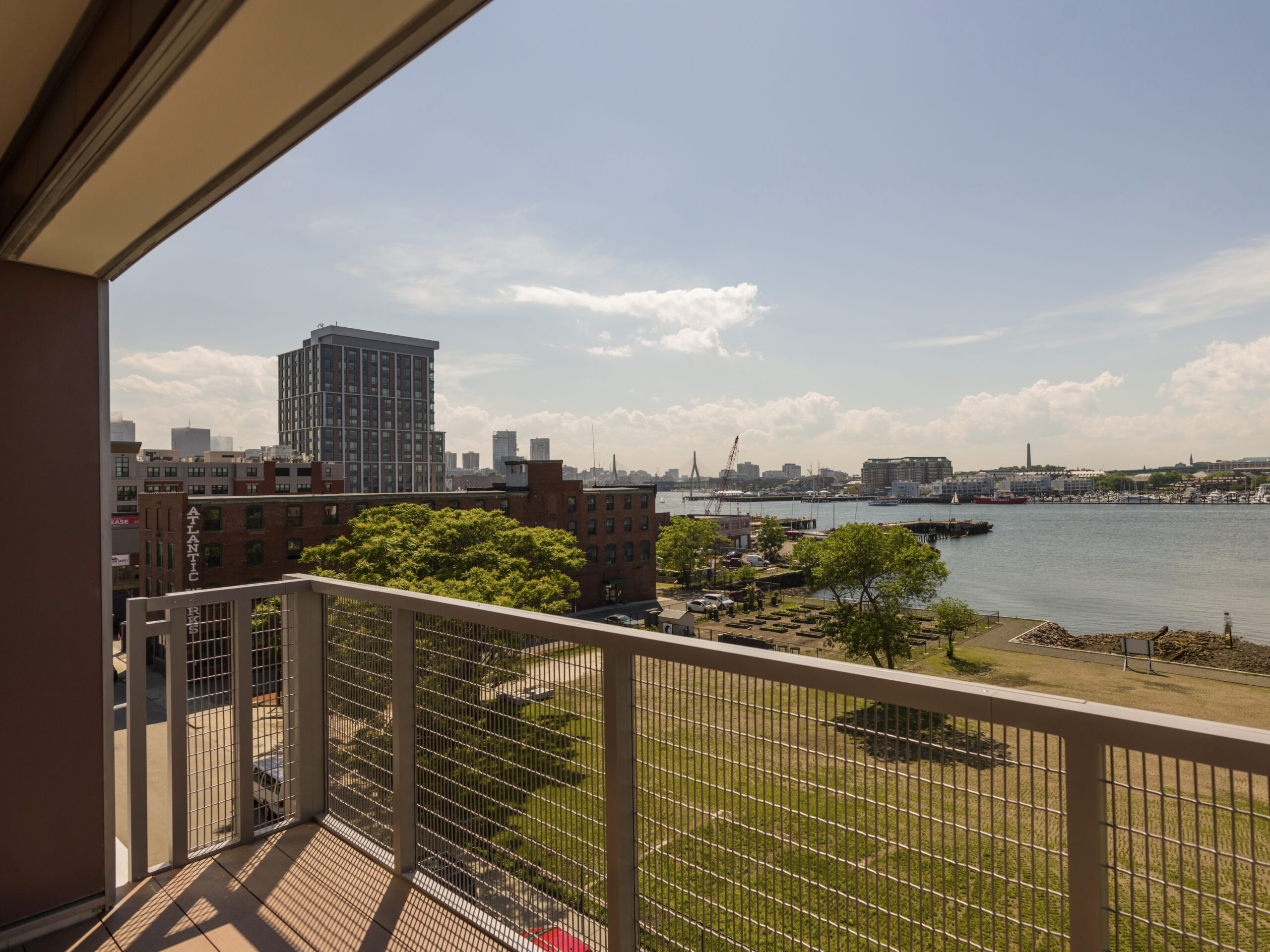
The project is situated on a 1.5-acre block spanning Border, Decatur, and Liverpool Streets, offering harbor views and a short walk to the Blue Line subway station at Maverick Square. It’s a classic transit-oriented development that reduces car dependence and provides easy connectivity to daily services, including a nearby grocery store, pharmacy, community health center, and restaurants.
Keeping the water at bay
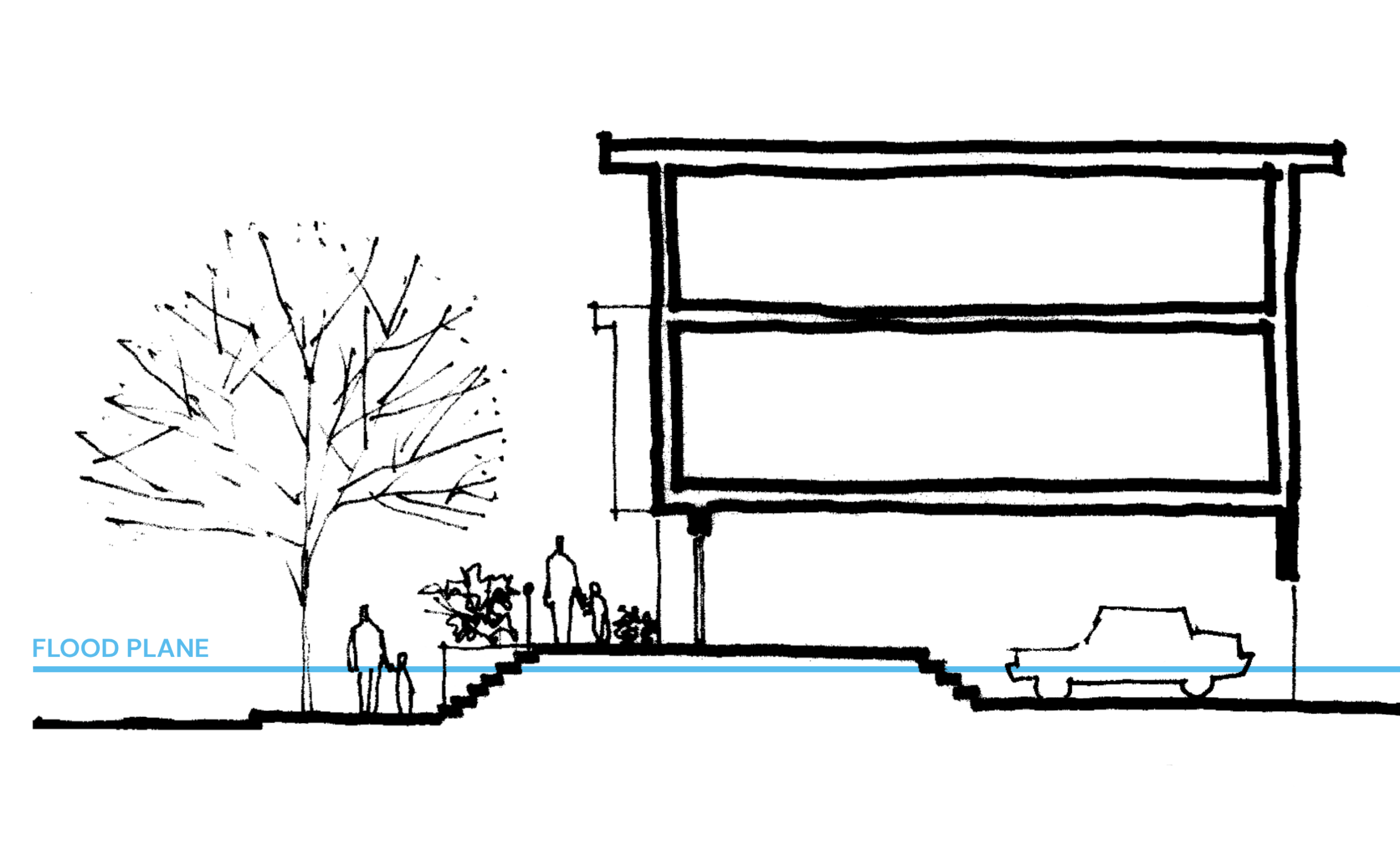
NOAH purchased the property shortly after Superstorm Sandy had wreaked havoc along the coasts of New York and New Jersey. With climate change posing a real threat and the property being located in the 100-year floodplain, subject to flooding if a 2030 supermoon king tide were to occur, it became crucial that the housing development coexist with water, rather than fight it.
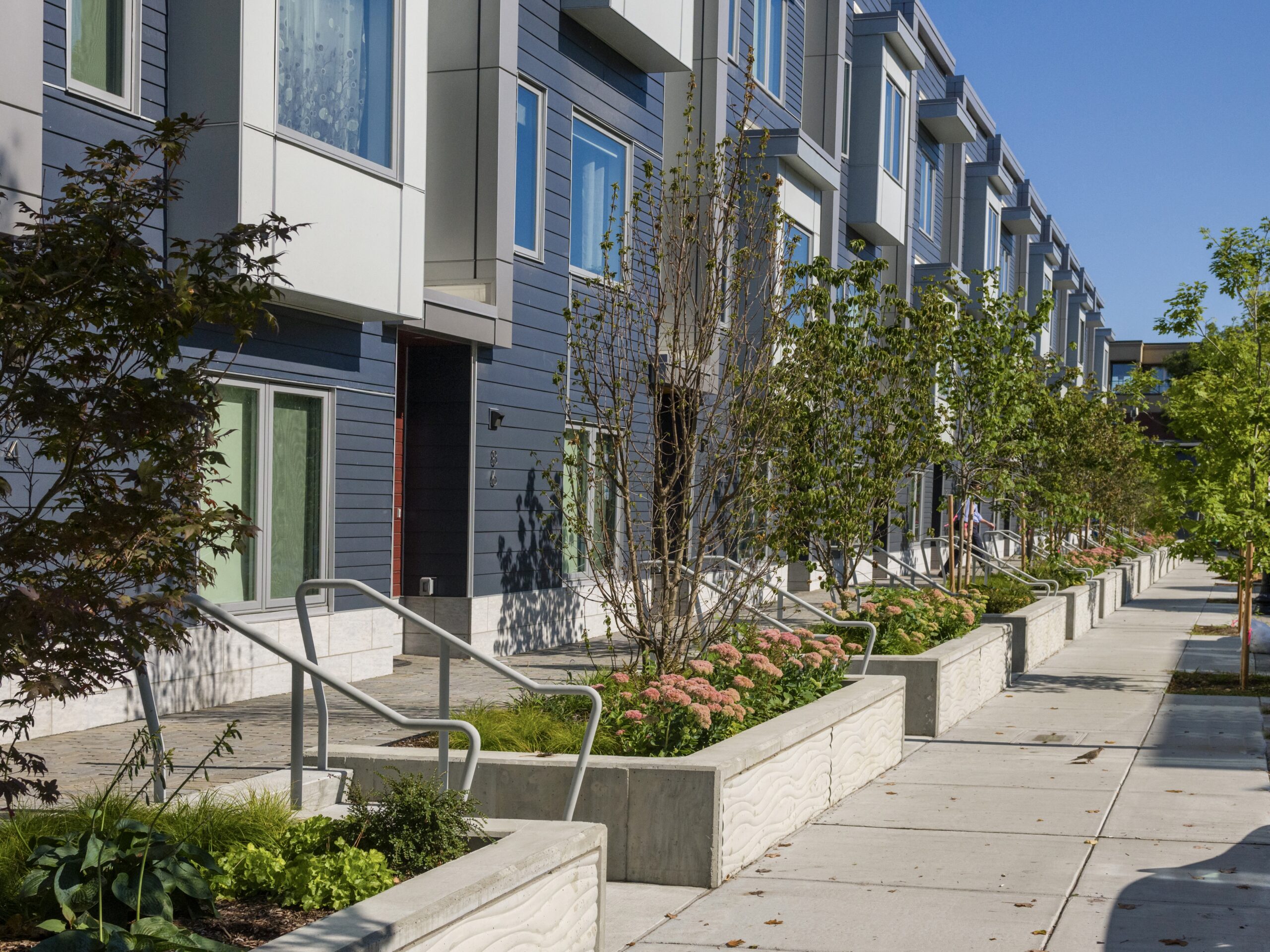
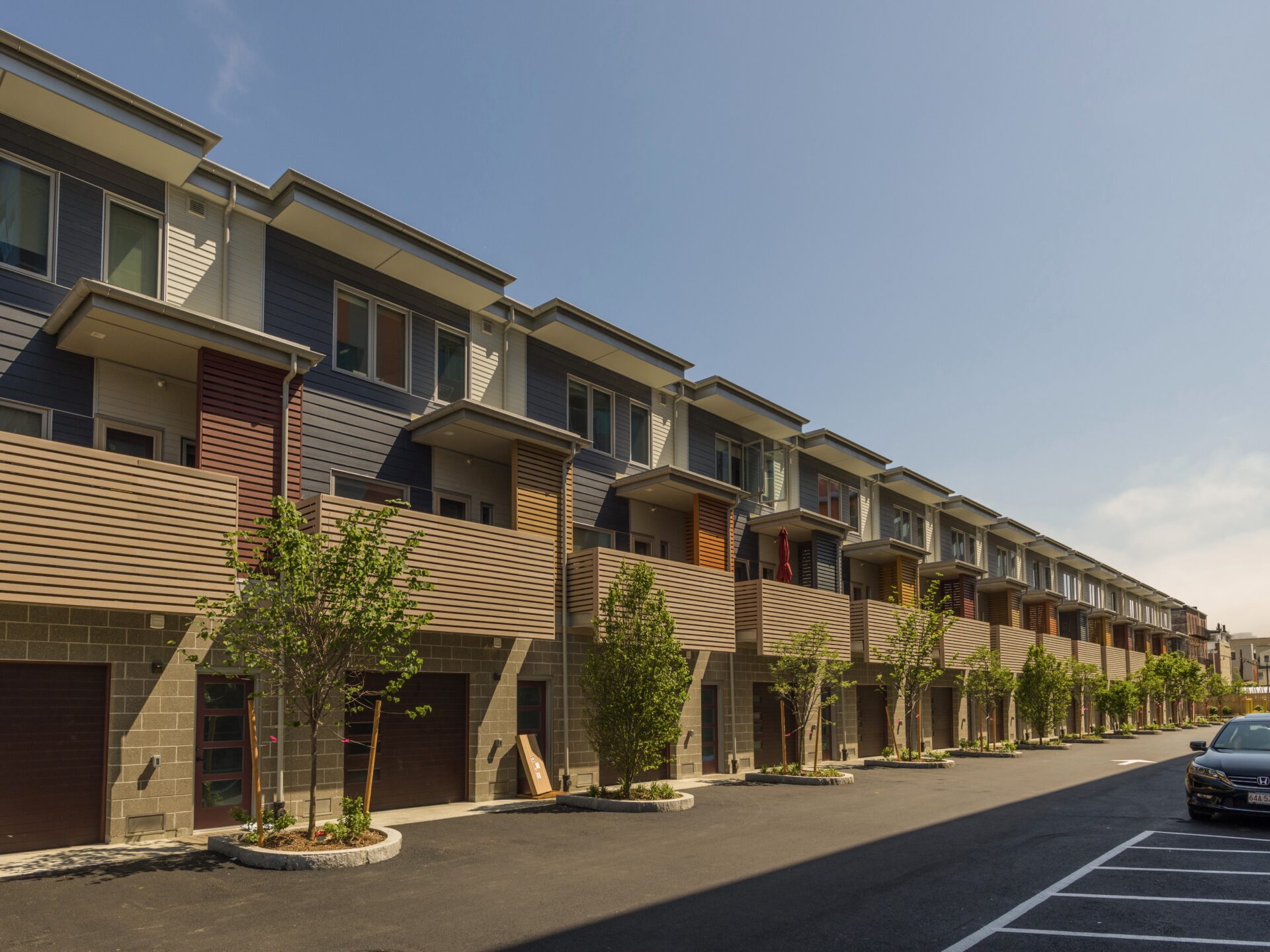
On Liverpool Street, the townhome entrances are located two feet above sidewalk height, atop a plinth, which protects the building from harbor storm surges and helps distinguish between private and public space along the street. To protect the Border Street building, the ground-floor interior spaces are raised approximately 2′-6″ to 3′ above sidewalk grade. Parking on the project site remains at grade, allowing storm water to flow through the parking area and private garages tucked under each building. Flood vents protect the structural integrity of the building, and durable, easy-to-dry finishes are used where temporary wetting might occur. Mechanical and electrical equipment are elevated well above grade as a protective measure.
Other resilience features include a green roof over the Border Street lobby pavilion, which helps manage stormwater and enhances views for upper units. Permeable paving, subsurface infiltration, and other best management practices are incorporated to treat runoff. A generous bike storage shed encourages exercise and non-fossil fuel transportation, and a solar-ready roof strategy was adopted during the design process.

Architecture that blends with its community
Joy Squared organized the site with two buildings. The first, a five-story mixed-use mid-rise, fronts Border Street, offering renters views of Boston Harbor and the city skyline. To reduce the visual impact of the development’s scale, Joy Squared broke the massing at a centrally located ground-floor lobby, creating the illusion of two buildings sitting side by side and helping the long block feel more human-scaled and responsive to the neighborhood context.
At the back of the building on Liverpool Street is a row of 15 three-story townhomes that match the finer-grained residential rhythm of that section of the neighborhood. Alternating bays and planted beds create a playful rhythm along the sidewalk, and each home features a small garage and a spacious balcony overlooking the mews-like space between the two parts of the development.
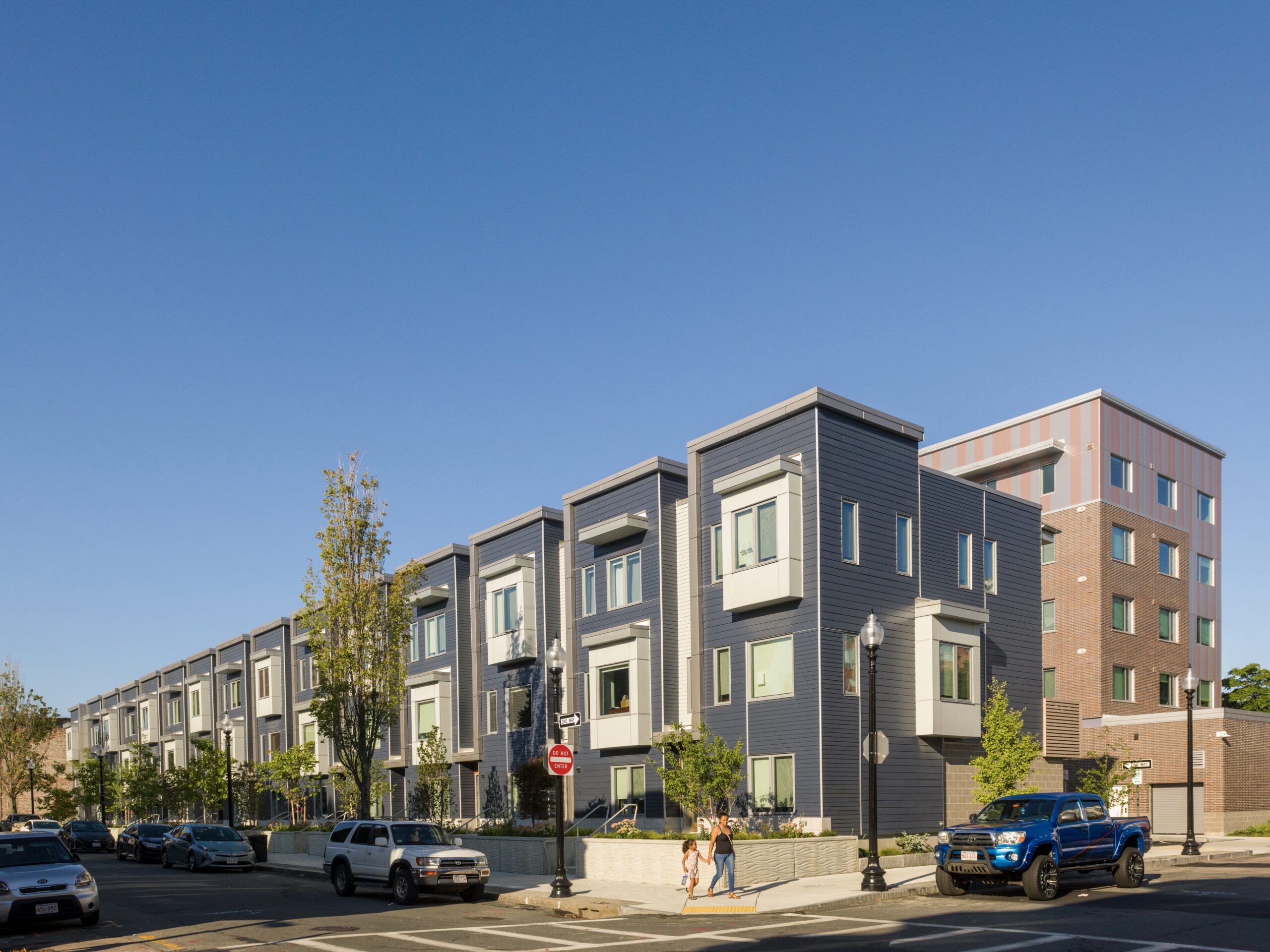
The Border Street façade pays homage to the neighborhood’s brick warehouse infrastructure, utilizing brick and fiber-cement panels. Deep balconies for each unit provide ample exterior living space with views toward the harbor or city on the upper four floors. The transparent ground floor features offices, a community room with a patio, and a restaurant tenant space with a designated outdoor terrace, all contributing to a dynamic streetfront.
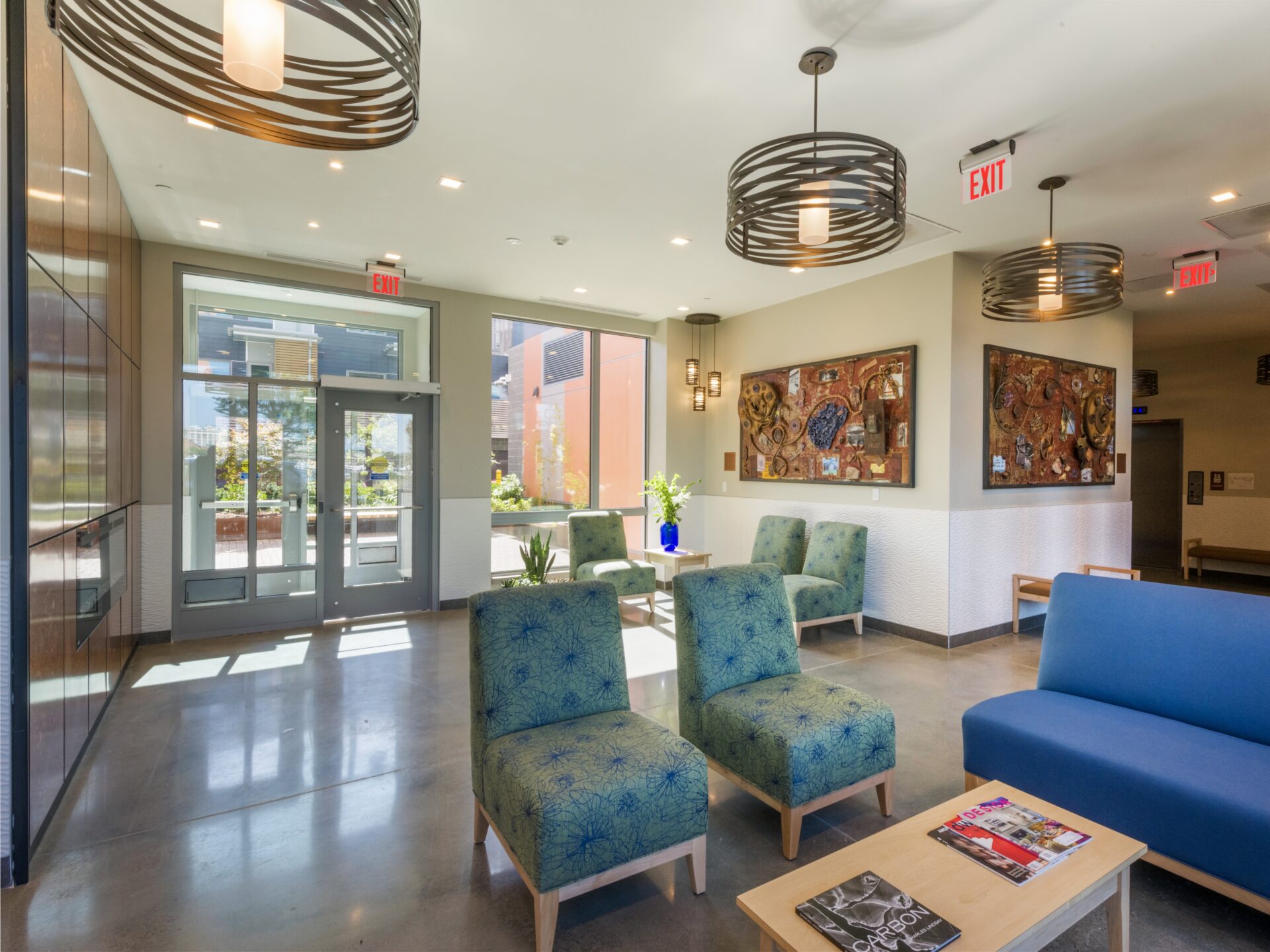
In the lobby, visitors are greeted by two custom artworks by B. Amore, an East Boston native and member of the Atlantic Works Gallery located across the street from Coppersmith. The artworks feature collages of found objects from the site excavation, cold-cast in a bronze-like material.
The site is also within Massachusetts’ Chapter 91, also known as the Public Waterfront Act, which governs development and activities in the state’s coastal and inland waterways to ensure public access and protect resources. To comply with Chapter 91, the Border Street building has a publicly accessible community room and toilets.
Mixed income and ownership
The original vision for the project was to have 100% homeownership units, but that strategy ultimately proved not to be financially viable. Instead, NOAH pivoted to a project with a mix of rental and homeownership units that blends incomes and ownership to reflect neighborhood realities and create pathways to stability. The final mix on the 1.5-acre site comprises 56 rental units—15 market-rate and 41 affordable, with 20 reserved for very low-income individuals—and 15 homeownership townhouses, comprising eight affordable and seven market-rate units. The market-rate homeownership units helped finance that portion of the project.
Revisiting project performance
When Joy Squared designed Coppersmith Village over 10 years ago, the resilience strategy was built around three testable ideas:
- Keep dwelling units above the water. By elevating residential and community spaces and allowing water to pass through at-grade garages and through the building by means of flood vents, interior living areas are protected from storm surge events.
- Dry fast, don’t rebuild. Ground-level materials and details (e.g., slab-on-grade, tile/concrete finishes where exposed, sealed penetrations) are selected to dry out rather than be torn out after a flooding event.
- Protect the backbone. Building systems are elevated above anticipated flood elevations and designed for energy efficiency to lower operating risk and cost.
- Reduce operating costs. The project was designed to be solar-ready, with tight building envelope targets, high-efficiency systems, durable, flood-resistant materials, and a green roof.
While the property hasn’t been impacted by a flood event since its construction—the ideal outcome!—it did install solar panels in 2024 through a Power Purchase Agreement that allowed NOAH to offset the energy costs of the public spaces in the building, saving an estimated $5,000/year in operating costs. The project was also awarded LEED Gold certification under the LEED for Homes Mid-Rise rating system.
The project itself has brought renewed investment to the surrounding properties, lifting property values and reducing blight. And, by keeping the building amenities to a minimum, NOAH, which owns and operates the property, can rent the market-rate apartments at lower rents than neighboring properties, helping more people access housing.
In conclusion, this project exemplifies what resilient development can achieve—revitalizing a community while ensuring affordability and protecting long-term investment. By striking the right balance between quality and access, it opens more housing choices in the neighborhood and sets a precedent for future developments.